
We asked you to ask Simone McGurk, Minister for Creative Industries, any questions, and here, the Minister shares her responses.
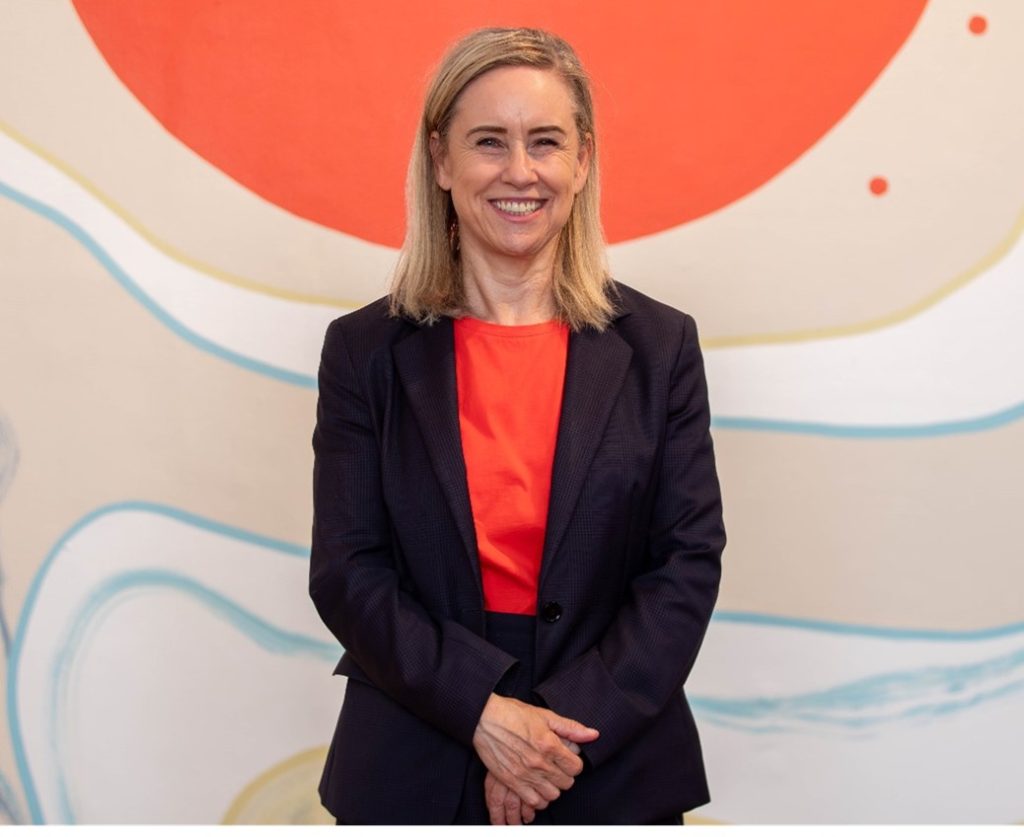
♦ Simone McGurk, Minister for Creative Industries.
Similar questions have been grouped together.
Q: “Much of WA’s creative investment remains focused on the Perth CBD and major regional centres. How will Creative WA ensure that projects like Perth Sky Sculpture Park, based in the Perth Hills and embedded in outer metropolitan areas, are recognised and supported as state-significant drivers of cultural access and economic growth?” – Johannes Pannekoek
Q: Perth Sky Sculpture Park is already connecting with national and international sculpture networks. How will Creative WA ensure WA’s most innovative creative projects are given the support to leverage their potential on the global stage, rather than remaining under-recognised at home? – Sandra Tinari
Q: Creative WA recognises cross-industry collaboration as key to growth. Perth Sky Sculpture Park is one example linking art with astronomy, heritage and tourism. How will the Government actively back projects like this that cut across disciplines and deliver benefits well beyond the arts sector? – Jenny van Gorkum
A: Creative WA is the Cook Government’s vision for the future, as a roadmap to guide priorities and support for WA’s culture, arts and creative industries over the next 10 years. Creative WA’s strategic priorities are to strengthen the creative, cultural and arts sector, share stories and celebrate place, and increase access and participation for all Western Australians.
Focus will be placed on the three spotlight communities, young people, First Nations peoples and those living in regional and outer metropolitan areas, with future initiatives taking these communities into account based on need and potential impact. The Cook Government, Lotterywest and Healthway have jointly committed $54.06 million to the funding of key initiatives identified as short-term priorities in Creative WA.
Funding is currently available for projects such as the Perth Sky Sculpture Park. We have provided a total of $221,529 to Sculpture at Bathers and $311,500 to Sculpture by the Sea Cottesloe. Funding is also available for sculptors.
In a round of the Arts Projects funding, we supported the City of Fremantle to undertake a retrospective exhibition of sculptor Theo Koning’s work, sculptural projects by Timothy Meakins and Ken Meyer, and provided nearly $80,000 to Sculpture at Bathers for the establishment of Sculpture West to support WA sculptors.
The Cook Government’s Percent for Art Scheme also plays a significant role in supporting sculptors by integrating public art into the built environment and creating professional opportunities for artists. The scheme mandates that up to 1% of the construction budget for new public buildings (valued at over $2 million) is allocated to commissioning public artworks. This creates a consistent and substantial funding stream for sculptural projects.
Q: While it is admirable that there is a vision for the development of a creative culture for the arts in WA, there are few opportunities to support professionalism in the visual arts in WA. There is a lack of respect for the vocation which is evidenced by a lack of opportunities for artists to exhibit or sell. Also, when was the last time a state gallery did a retrospective of a living WA artist? There is a complete lack of regard for long term commitment to artist’s careers beyond encouraging emergence. Can the WA State Government support a dedicated art purchase scheme for individuals or businesses wanting to purchase art in an interest free arrangement as existed in Tasmania? This may encourage people to buy WA artist’s work and provide greater incentives to develop real support for practicing artists. – Jeremy Blank
A: I’m proud of the support we provide to Western Australia’s visual arts sector. Key institutions such as PICA, Fremantle Arts Centre, Bunbury Regional Art Gallery, Geraldton Regional Art Gallery, Art on the Move and Cool Change Contemporary receive funding through the Cook Government, helping to sustain a vibrant and diverse arts ecosystem.
Local commercial galleries also continue to punch above their weight, contributing significantly to the cultural and economic vitality of the sector.
Visual artists are also redefining how art is experienced and sold. Through open studio events, they’re connecting directly with audiences, selling work and building community support. In 2023, Margaret River Region Open Studios attracted over 145,000 visits and generated $11 million in economic benefit. In 2025, Melville Open Studios welcomed 5,000 visitors and nearly $100,000 in sales. These events are not only boosting tourism and local economies – they are reshaping the art market, with growing artist participation, strong sponsorship and recognition through major awards.
The Art Gallery of Western Australia (AGWA) continues to champion WA artists. Its recent retrospective of internationally acclaimed ceramicist Sandra Black ran from October 2024 to February 2025. Currently, AGWA is exhibiting Re-PLAY, featuring WA artist Maxxi Minaxi May, on display until February 2026, along with Elise Blumann from June to November 2025 and ‘Revivification’ by local artists Guy Ben-Ary, Nathan Thompson and Matt Gingold with Neuroscientist Stuart Hodgetts. In addition, the AGWA foyer features a newly commissioned work with WA artists collaborating with Indonesian artists to create a massive new entry banner.
AGWA’s $25 million Tomorrow Fund is transforming the State Art Collection by acquiring ambitious contemporary works from WA, Australia and abroad. To date, income from the fund has enabled the acquisition of over 200 works across all media.
Q: Words and/or phrases that include references to the ‘arts’ and ‘creatives’ can be generalised to the extent that it is not always clear that the arts and creatives in all forms are included. Could the Minister please outline her understanding of what constitutes both of these words and how independent, practical and cross-disciplinary inclusiveness and sustainability can be assured? – Sandy Toussaint.
A: The Cook Government’s 10 year vision to grow and sustain our creative ecosystem, Creative WA, refers to the more inclusive terms of ‘culture, the arts and creativity’, rather than simply the ‘arts’. By doing so we include our diverse and thriving artistic community across all of the creative industries and various art sectors.
‘Creatives’ refers to creative and cultural practitioners; people that work and participate in creative and cultural areas in a professional capacity. These people include independent artists as well as the professionals in our creative workforce who work across our creative industries in many and varied creative roles, such as lighting designers, sound engineers, curators and designers.
The Creative WA vision and focus on inclusivity across our vast state is centred on the principles that creativity is central to life in Western Australia, a partnership approach, and equity and inclusivity. Creative Industries’ competitive arts grants and multi-year funding for arts organisations play an important role in nurturing independent, practical and cross-disciplinary inclusiveness. These general arts grants, combined with the focused grant programs for creative learning, connecting to country and reconciliation outcomes, along with funding for regional applicants and projects, together reduce barriers and increase participation in arts, culture and creativity across Western Australia.
Q: As many children and youth are not participants in sports but are emerging artists in one form or another, can the KidSport voucher either be extended to include arts participation, or replicated in an alternative KidsArt voucher where registration fees for arts activities could be used for registration fees of approved arts activities from Avon Valley Arts Society? – Elizabeth Hoek
A: The Kids All Access Areas Vouchers program is a 2025 Cook Labor Government election commitment, designed to offset the cost of children and young people attending arts and cultural events. Available at the end of the year, the $50 vouchers will be accessible for children aged 5 to 15 and will be available for up to 120 venues right across WA – including metro, outer metro and regional.
Q: What is your opinion on a ‘lazy tax’ or incentives for owners of vacant buildings to lease out premises for below market rates for creative workers and businesses, similar to the approach being proposed in Sydney? – Anonymous
A: I’m aware of the proposal by a City of Sydney councillor to subject vacant commercial properties to a ‘lazy place tax’. I look forward to seeing that and other issues explored more deeply at The Art of Tax Reform: Unlocking opportunities to improve taxation for Australian creative industries at the end of the month. I’m absolutely committed to listening and learning about other jurisdictional approaches to this issue.
Q: Artists in the North of Perth are sadly neglected. There are at least six artist groups with around a hundred members each. Memberships for some clubs are capped at one hundred, with people waiting to join. Others have new members joining. These art clubs exhibit and sell their work several times a year. One club has been fundraising for Surf Life Saving for well over a decade. The rest of the clubs have no guaranteed place to create and exhibit work or properly store equipment such as tables and easels. In my club the tables are old, cumbersome and heavy. We rely on a few good men to lift them. But as each year goes by this is more and more difficult. We have recently been ejected from a very good exhibition space while it is being renovated and told that we may no longer exhibit there. The council offers shabby community halls as an alternative, far from the coast and its vital parking and foot traffic. I believe ageism is at work here. What can the Minister do to help arts in the northern suburbs? – Toni Stritzke
A: I appreciate that access to affordable space to make and exhibit work is important for visual artists. I am also pleased to see creative approaches in the form of co-location of certain groups. To support the creation of work and participation in exhibitions the Department for Creative Industries offers a range of grants. The Arts Projects for Individuals and Groups offers up to $80,000 for artists and creative industry professionals to deliver a one-off project or a program of activity. The Arts Short Notice Activity Program (Arts SNAP) offers grants of up to $5000 for national and regional opportunities, and up to $10,000 for international, to undertake short notice opportunities for artists and creative industry professionals.
In terms of support for capital upgrades the Cook Government through Lotterywest is committing $45 million across the next three years to support upgrades for arts and cultural infrastructure and spaces across the State. This commitment includes $30 million towards refurbishment and equipment needs for arts and cultural centres across WA and $15 million of targeted support towards Aboriginal art centres.
Q: Minister, how serious is the Government about allowing AI free access to artists and writers work? To me it sounds like a complete surrender of copyright protections and essentially devaluing such work to a free commodity ie. artists and writers already paltry incomes get pressured to even lower levels. I look forward to a clear answer. – Irvine Hay
A: The recent Interim Report – Harnessing Data and Digital Technology, published by the Productivity Commission in August 2025 is a set of recommendations on the future of Artificial Intelligence in Australia.
The complex dimensions to AI are nationwide issues and following the Interim Report’s release, Federal Treasurer Jim Chalmers has made a commitment to conduct another review into AI regulation, to establish gaps in existing governance or to develop new language and principals for this rapidly developing technology.
I appreciate the importance of copyright protections for our artists and writers. As a national issue, I am committed to following it closely and to continuing to listen and advocate for creatives.
Q: Would there ever be a government allowance for artists to benefit from, where instead of job-start they stay seeking art jobs, but also can prove their production of works/research etc as equivalent to work? – Annette Peterson
A: While income support programs are the responsibility of the Federal Government and are administered by Centrelink through Services Australia, our State Government is actively supporting its creative workforce through multi-year investment in WA organisations that collectively employ over 600 full-time equivalent roles, together with our Cultural Statutory Authorities and Arts and Culture Trust who are significant employers in the creative industries. We are supporting the growth of the WA creative workforce through Creative WA Fellowships and Internships, and by co-investing in Creative Workplaces – a recently launched initiative to support fair, safe and respectful workplaces for artists, arts workers and arts organisations throughout Australia.
Q: Will the State Government reintroduce annual CPI increases for all multi-year arts organisations? – Anonymous
A: Companies funded through the current Arts Organisation Investment Program currently receive a compounding annual increase, which is supported by the Arts Lotteries Account for the duration of their funding agreement.
