
Delve into 2,000-year-old Chinese history in an extraordinary exhibition created by the WA Museum in collaboration with Shaanxi Cultural Heritage Promotion Centre and the Emperor Qin Shi Huang’s Mausoleum Site Museum.
LYN DI CIERO
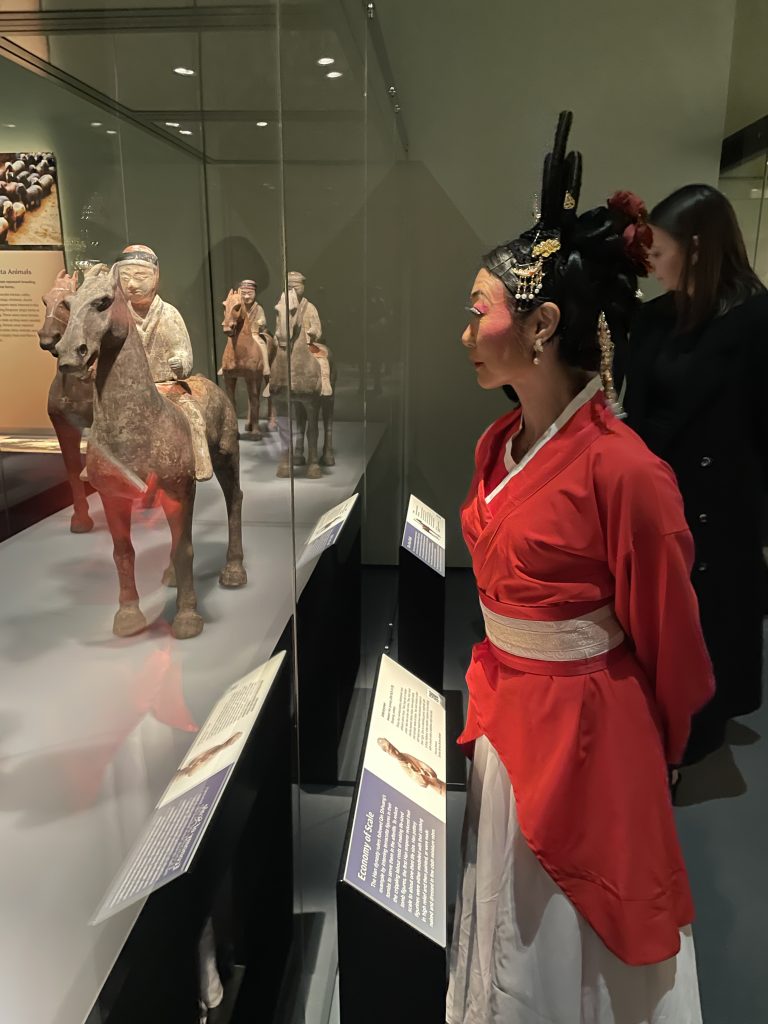
♦ Performer Quie Ying at Terracotta Warriors: Legacy of the First Emperor. Photo Lyn DiCiero.
Picture women in elegant full-length gowns, some wrapped in fur jackets, perfume wafting over an oversized marquee, together with the aroma of authentic Chinese fare, and men looking equally exquisite in formal black suits. This was the VIP opening of Terracotta Warriors: Legacy of the First Emperor at the WA Museum Boola Bardip. It’s not often in Perth an exhibition opening includes a request formal for attire as a tribute to the importance of a show, in this case well deserved.
It’s easy to see why Sheila McHale, Chairperson of the WA Museum said in her speech on the night that the exhibition was the envy of “every state in the country, every minister for the arts, every minister for tourism, and I think every museum, CEO because this exhibition is only here in Perth, in Western Australia.” Years of careful negotiation are behind the blockbuster, its genesis in a 2009 memorandum of understanding between the Chinese and Australian governments affirming a shared commitment to safeguarding cultural ethics and cultural heritage protection. The tangible results of this ongoing cooperation between the two countries is seen in Terracotta Warriors: Legacy of the First Emperor.
While the life size terracotta warriors are the centrepiece of the exhibition, 225 artefacts are included in the show, fleshing out the lives of people in ancient China. Half of the artefacts on display have never left China before. Expect to see extraordinarily detailed chariots, coins from the era, gold ornaments, domestic ware in vessels and tools, armour and weapons of warfare. The exhibition is also interactive with electronic ‘touch points’ throughout the show, culminating in an immersive wrap-around room featuring iconic imagery found during the exhibition journey.
First discovered in 1974 when farmers in Shaanxi Province were digging a well near the then unknown imperial tomb of China’s first emperor, Qin Shi Huang, the site is an archaeological hotbed measuring approximately 100 square kilometres, containing over 8,000 soldiers, over 100 chariots, as well as hundreds of horses and other animals. The massive terracotta army was assembled to protect the emperor in the afterlife, with construction beginning when Qin Shi Huang was just 13. Over the following four decades, more than 700,000 workers shaped and completed the extraordinary mausoleum buried with the emperor in 210-209 BCE. It is the largest and most ambitious imperial tomb ever built for a single ruler in China.
Now a UNESCO World Heritage site, archaeologists continue to make new discoveries, including a pleasure garden with bronze waterbirds and terracotta musicians. While ongoing excavations reveal new details of this hidden world, the tomb chamber of Qin Shi Huang remains firmly shut. Ancient records describe the tomb as including models of palaces, a ceiling mirroring constellations, but flowing rivers of deadly mercury and crossbows ready to fire at any intruders.
In a video message, Gary Cowan, CEO of the Australia China Foundation, said Australians of all ages are fascinated and intrigued by the story of the terracotta warriors and the history, craftsmanship, artistry and grandeur they represent. “It’s a once in a generation opportunity for West Australians and visitors to see these world heritage treasures here in Australia.” Cowan related recently visiting Australian students in China, a fascination for Chinese history sparking a desire to study abroad. “I hope the exhibition provides an opportunity for many Australians, young and old to find a story that enriches their outlook too.”
Terracotta Warriors: Legacy of the First Emperor is on show at WA Museum Boola Bardip until 22 February 2026.
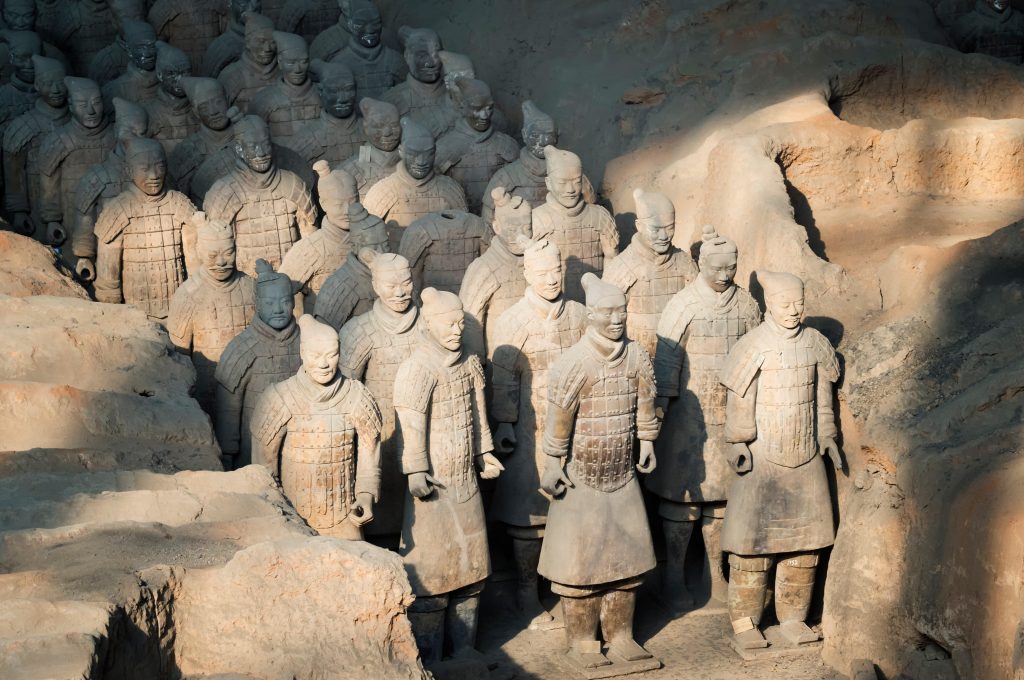
♦ The terracotta warriors of China’s first Emperor, Qin Shi Huang, located in the Lintong District of Xi’an, Shaanxi.